
Breast health self-examination method
If you have painless hard lumps, skin orange peel-like changes/dimples, nipple retraction/bloody discharge, or obvious asymmetry of both breasts in a short period of time, if you find abnormalities, go to the breast department of a regular hospital for breast color ultrasound or mammography as soon as possible.
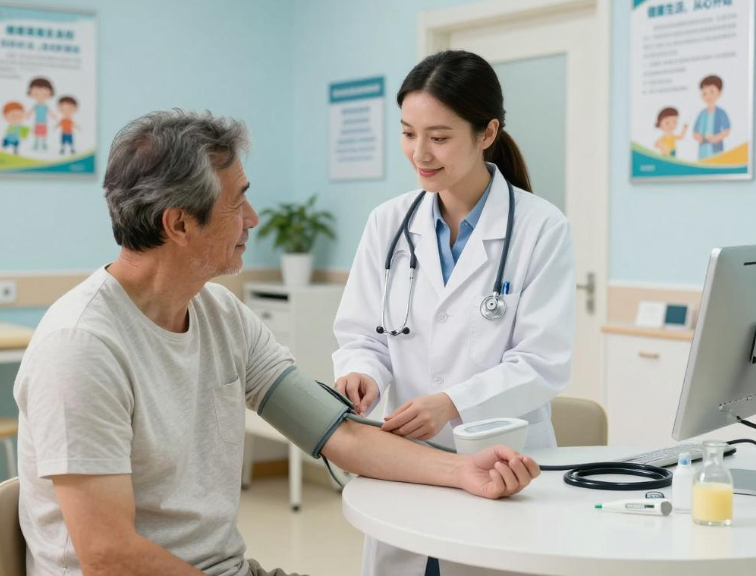
You may have come across a lot of conflicting opinions. Some say that self-examination can save lives, while others say that self-examination is useless and will increase anxiety. I have been in the breast department for almost 8 years and have seen too many patients who discovered problems in time due to self-examination. I have also seen many girls who scared themselves out of thyroid nodules by touching the wrong thing. I have just sorted out all the issues that everyone is concerned about.
Why do we need to check 7-10 days after the end of menstruation? In fact, it is a time period when estrogen levels are low. At this time, the breast glands are at their softest state throughout the month. If there are any abnormal lumps, they are easy to feel and will not be disturbed by physiological gland thickening. If you are already menopausal and your hormone levels have been stable, you don’t have to worry about the day. Just choose a time that is easy to remember, such as the day when your monthly salary is paid, or the day before the mortgage payment. Anyway, it can be done in 5 minutes, which saves much time than applying a facial mask.
The inspection does not need to be particularly formal. You can just do it casually when you stand in front of the mirror and apply body lotion after taking a shower. Let your hands hang down and look again, then put your hands on your hips and raise your head to look again. You don’t need to remember any standard shape. Your own breasts have been growing for more than ten years and you are most familiar with them. If the smooth skin suddenly becomes wrinkled like three-day-old orange peels, or if the underwear is suddenly stained with yellow, brown or even bloody secretions, or the nipples that were once convex suddenly become concave recently, something is definitely wrong. Last month, a 32-year-old mother of two children came to see a doctor. Even after weaning her baby and changing her underwear, she found brown scabs on her nipples. Even though they were not painful or itchy, she didn't take them seriously. It took her three months to come, and she was found to be an intraductal papilloma. Fortunately, it was benign. She went home after being removed from the clinic. If it took another six months, there would be a real risk of malignant transformation.
Palpation is the most common pitfall. Don't come up and grab them all! I've seen too many girls cry as soon as they come in, saying that they felt a hard lump and were afraid it was cancer. When the test turned out, they found normal breast glands. If you grab the soft glands, they will definitely squeeze them into a hard ball. Whoever touches the lump will have a hard lump. The correct method is to use the pads of your index finger, middle finger, and ring finger, which is where you usually touch the fingerprint unlocking part of your phone, and press flat against the breast. You can touch in circles around the nipple, or you can sweep vertically from the armpit to the nipple, or even press area by area like a grid. There is no standard answer to how to do it smoothly. If you are afraid of being unable to feel accurately while standing, lie flat on the bed with a small pillow under your shoulders. The breasts will be flat on the chest wall, the glands will not be piled together, and small lumps of a few millimeters cannot be hidden.
What should I be wary of if I touch it? There is no need to memorize a bunch of complicated grades, just look at three points: first, the hardness. If it is as soft as touching the lips, it is definitely fine. If it is a bit tough, like touching the tip of the nose, it is most likely hyperplasia or fibroma. If it is as hard as touching the forehead, be careful; second, whether it can be pushed, if it is slippery to touch. If it can run around, it is basically benign. If the nail can't be pushed, you should check it quickly; the third is whether it hurts. Most malignant lumps are not painful in the early stage. On the contrary, the hard lumps that hurt like hell before menstruation and disappear immediately after menstruation are basically physiological hyperplasia, so there is no need to worry.
Many people have asked me before that if the European and American guides say that self-examination is not recommended, does that mean there is no need for self-examination? In fact, these are suggestions in two different medical contexts: The popularity of breast cancer screening among women in Europe and the United States is very high, and most people undergo regular breast ultrasound and mammography every year. Most of the abnormalities found in self-examination are false positives, which will increase unnecessary biopsies and punctures, so routine screening is not recommended for people with ordinary risk. Self-examination is a standard; however, many women in our country do not have the habit of doing breast examinations every year. Many early-stage breast cancer patients come to see a doctor after feeling the lump first. In this case, self-examination is of great significance. To put it bluntly, it is not that self-examination is useless, but you must know how to do it correctly, and do not regard self-examination as the only screening method.
There is really no need to touch it every day. I met a 22-year-old girl before. After reading the popular science on the Internet, she had to touch her breasts for ten minutes every day before going to bed. Her breasts hurt and she felt there were lumps. She had four color ultrasounds in three months and everything was fine. However, her menstruation was irregular because of anxiety. It is completely unnecessary. Just check her breasts once a month.
In the final analysis, breast self-examination is essentially to make you familiar with your body, just like you know that you have a new acne on your face. If your breasts change a little bit one day, you can notice it immediately. If there is a problem, go to the doctor. If there is no problem, you should eat and drink. Don't scare yourself, and don't take it too seriously. That's enough.
Disclaimer:
1. This article is sourced from the Internet. All content represents the author's personal views only and does not reflect the stance of this website. The author shall be solely responsible for the content.
2. Part of the content on this website is compiled from the Internet. This website shall not be liable for any civil disputes, administrative penalties, or other losses arising from improper reprinting or citation.
3. If there is any infringing content or inappropriate material, please contact us to remove it immediately. Contact us at: