
Common sense content of daily care for the elderly
The core essence of daily care for the elderly has never been to copy the unified "health manual standards". Instead, it takes the individual feelings of the elderly as the primary premise and balances the three core directions of disease control, maintenance of physical functions, and psychological and emotional needs. All operations must be carried out around the core goal of "allowing the elderly to live with dignity and more comfortably." There is no absolutely correct universal process.
To be honest, I have been working as a caregiver in a community nursing home for almost 4 years, and I have seen too many family members relying on the "standard care list" found online. In the end, the elderly suffered, and the family members were also aggrieved.
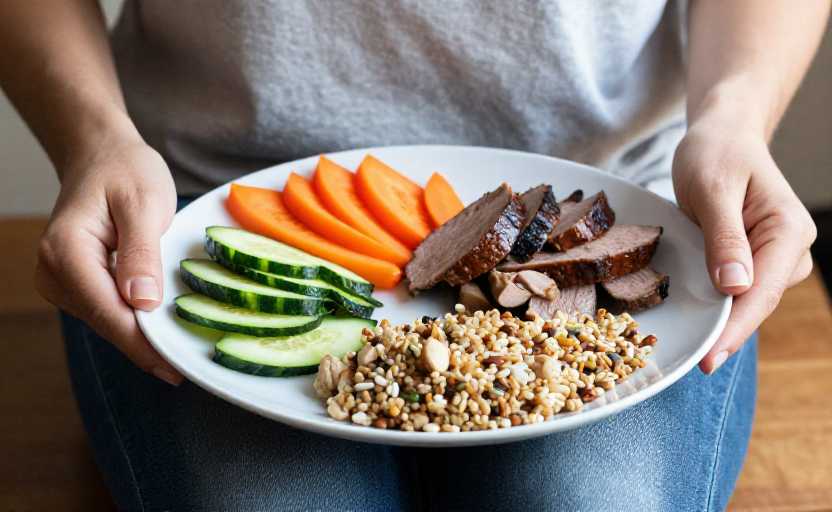
Last month, I met Uncle Wang, who lives in Building 3. He is 78 years old and has type 2 diabetes for 12 years. His children read the blood sugar table online and even banned the brown sugar steamed buns that the uncle has eaten all his life. Every meal is made of coarse grains and brown rice, and there is not even a sweet thing. As a result, within half a month, the uncle began to secretly hide fruit candies, inserting one when no one was home, and his blood sugar went up and down even more horribly than before. Later, we discussed with the family that we would give him half a brown sugar steamed bun with half a cup of sugar-free soy milk for breakfast every Wednesday and Sunday. We would test his blood sugar once after eating. As long as it does not exceed 10mmol/L, he would be fine. It's been almost two months now, and my blood sugar is very stable. I go downstairs for a walk every day and can chat with my old chess friends, "My girl is finally willing to feed me steamed buns."
Regarding the diet of the elderly with diabetes, there are currently two voices in the academic community. One school advocates strict control of the glycemic index to delay the occurrence of complications as much as possible.; The other group advocates giving priority to ensuring the quality of life. As long as blood sugar fluctuations are within control, there is no need to completely deprive the elderly of the pleasure of eating. In practice, most of us prefer the latter. After all, it is much better to make the elderly happy than to live for two more years but be miserable every day.
In fact, it’s not just about diet. Many people think that “the more diligent the care, the better.” This is not necessarily true. I had taken care of Grandma Li who had broken her femoral neck. During the early days of being bedridden, her children set an alarm clock to turn her over every two hours. Even in the middle of the night, they had to force her to wake up and turn her over, saying they were afraid of developing pressure sores. As a result, Grandma Li couldn't sleep well all night long, her blood pressure soared to 180/100, and she felt exhausted. Later, we changed her to a thickened pressure-reducing mattress. We first assessed her skin condition and adjusted her to turn over every 3-4 hours at night. We should do so gently, supporting her waist and legs without pulling hard, and there was no need to wake her up completely. Just put a pillow on her side. Afterwards, Grandma Li was able to sleep through the night, her blood pressure slowly returned to normal, and she didn’t develop any pressure ulcers even after lying down for two months. The current pressure ulcer care guidelines do recommend turning over every 2 hours, but that is for disabled elderly people with poor skin conditions and extreme weight loss. If the elderly themselves are in good nutritional status and have a certain ability to move independently, there is no need to force time to torment people.
Many people still have a misunderstanding, thinking that the elderly must "exercise more to stay in good health", and are constantly forced to walk thousands of steps every day. A while ago, 68-year-old Aunt Zhang came to us and said that her knees hurt so much that she couldn't go downstairs. After asking, we found out that she had degenerative lesions caused by wear and tear on her meniscus. Her son watched short videos saying that "old people need to walk more to exercise their legs and feet." He forced her to walk 10,000 steps a day, which made her knees swell. We adjusted the plan for her. She sat at home and did 2 sets of ankle pump exercises and 15 minutes of quadriceps contraction exercises every day. She also walked slowly downstairs 3 times a week for 15 minutes each time. She stopped when she felt a little pain. Just over a month later, Aunt Zhang was able to go downstairs to buy groceries by herself. When she saw us, she said, "I knew I wouldn't have suffered like that." Nowadays, the rehabilitation community has different tendencies regarding exercise for the elderly. Some advocate increasing the amount of activity as much as possible to maintain cardiopulmonary function, while others advocate that existing functions should be preserved on the premise of not causing pain or damage. We generally recommend choosing the latter. After all, joint wear is irreversible. Only the elderly know whether it hurts or not. There is no need to suffer for the so-called "health standards".
To put it bluntly, many family members only see the "illness" and not the "person" when doing nursing care. There used to be an Aunt Liu who was mildly incontinent. Her children always told her in front of outsiders, "Why did she wet her pants again? You are so old and you are not careful." She would not close the door when changing her diapers, which made her feel very low self-esteem. She deliberately drank less water every day and ended up in the hospital with a urinary tract infection. Later, we repeatedly told the family members that when changing clothes, just say "change into something clean." When buying diapers, buy thin ones that look like normal underwear. Don't walk around the community with large packages. When changing, close the door and don't let outsiders see. Gradually, my aunt is willing to drink water, and occasionally she can go to the park with her old sisters. My deepest feeling after being a nurse for so long is that the dignity of caring for the elderly is more important than any nursing skills.
There is a saying that is often said in our industry: "Nursing should follow the needs of the elderly, not the standards for the elderly." Just like some old people who have been smoking all their lives, and their lung function is still good when they are over 90, there is no need to force them to quit smoking. Just smoke two less cigarettes a day. Otherwise, if they quit smoking abruptly, they will be in a bad mood and be prone to other problems. ; Some elderly people like to eat home-pickled pickles. As long as their blood pressure and kidney function are normal, it doesn't matter if they eat half a plate every day. It is better than eating bland vegetables every day and ending up with no food and malnutrition.
After all, caring for the elderly is never about completing KPIs, and there is no absolutely correct standard answer. You treat him as an ordinary person with his own preferences and self-esteem, rather than a "faulty machine" that needs to be repaired according to standards. It is more effective than memorizing 10 nursing manuals.
Disclaimer:
1. This article is sourced from the Internet. All content represents the author's personal views only and does not reflect the stance of this website. The author shall be solely responsible for the content.
2. Part of the content on this website is compiled from the Internet. This website shall not be liable for any civil disputes, administrative penalties, or other losses arising from improper reprinting or citation.
3. If there is any infringing content or inappropriate material, please contact us to remove it immediately. Contact us at:
